

Tanat Valley 3 by Peter Drost
This article is taken from Peter's description on the Model Railway Club website.
https://www.themodelrailwayclub.org/converting-a-dapol-sentinel-shunter-to-scale-7/
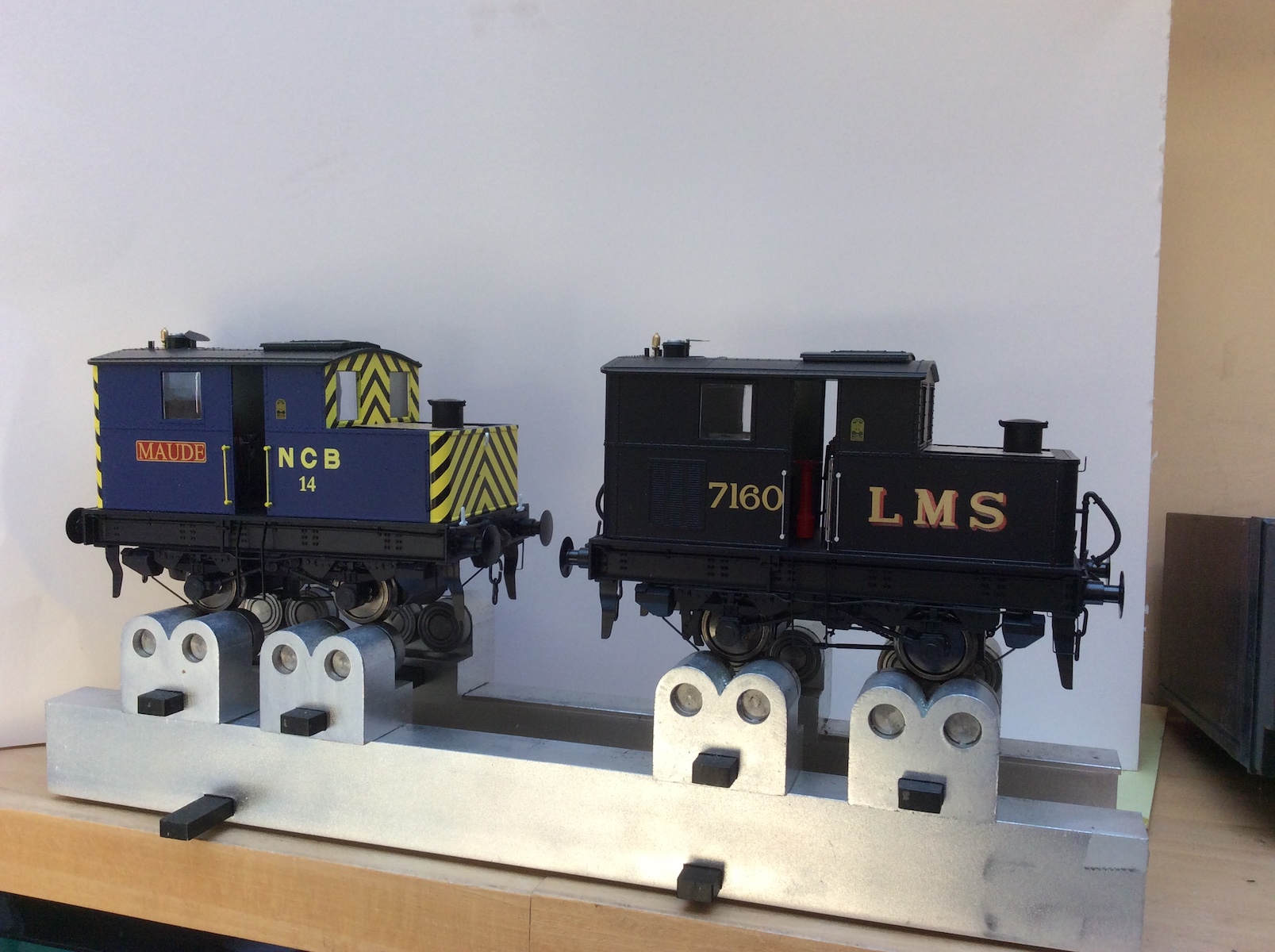
For several years I had been admiring a fellow modeller’s Sentinel shunter when he brought it to run at our Scale7 Southeast Area Group meetings. So, when Dapol announced at Warley in 2017 that they were going to produce an RTR model of a Sentinel shunter, I decided to buy one. I ordered it from Hattons in the Autumn of 2018, and I finally received delivery in December 2019.
I knew that it would have to be converted but I did not give it a lot of thought, but I had a feeling it would not be too difficult because it did not have a chassis that came close to the outside face of the driving wheels, which is the case with the Dapol Pannier. I had studied the Dapol Pannier in detail with a view to buying one but I realised that it would be difficult to convert.
Returning to the Sentinel, I had it for about 3 months before I did anything while I was thinking how to do the conversion. Then suddenly I realised it may be possible to just push the wheels out. The longest part of the operation was finding the tools for the work.
Ideally you will need the following tools:-
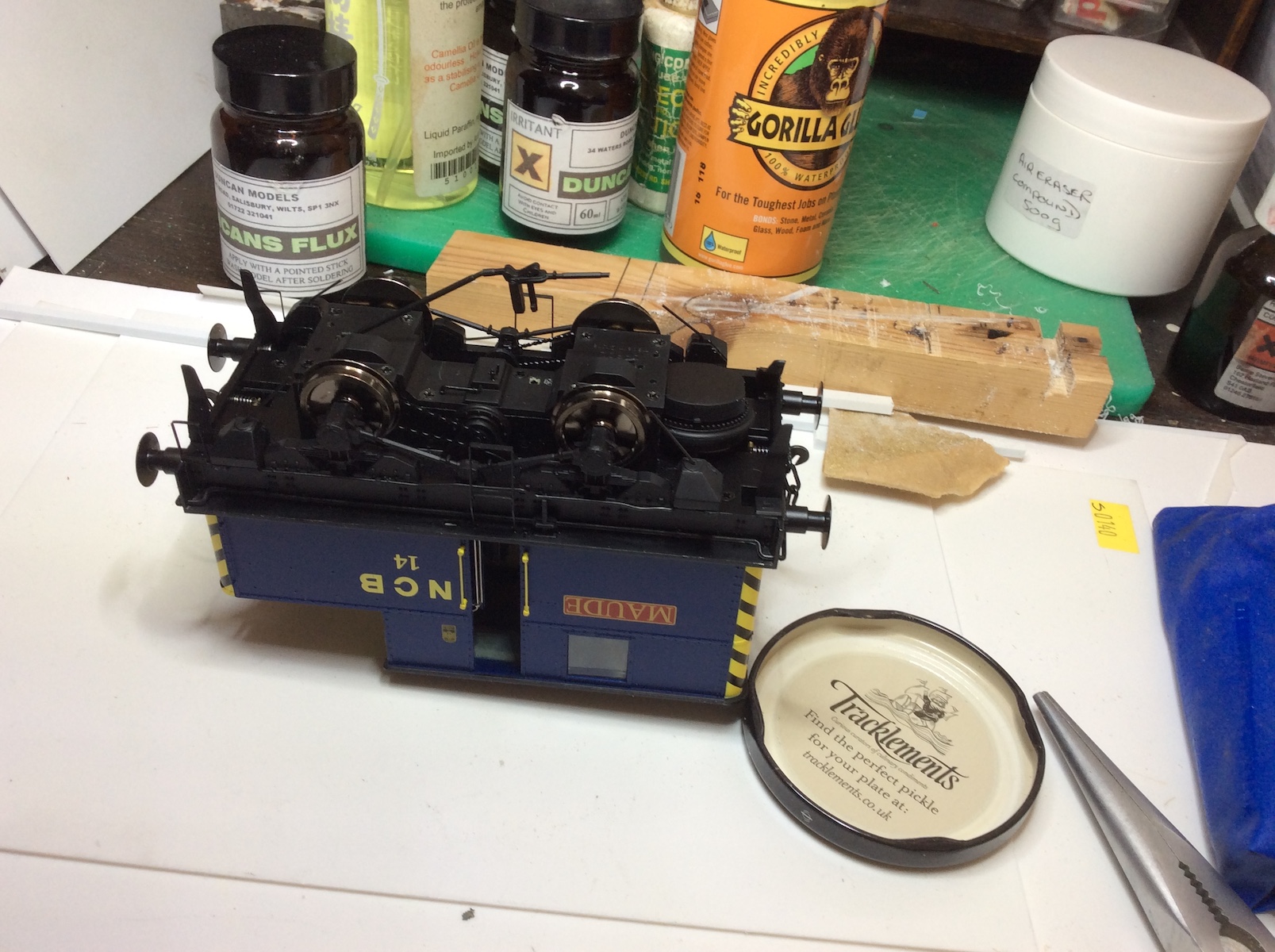
The first task is to remove the brake gear since it is obstructing the retaining cover which keeps the wheels in place.
On the first Sentinel I converted I damaged the brake gear in removing it but it helped me realise how to do it properly.
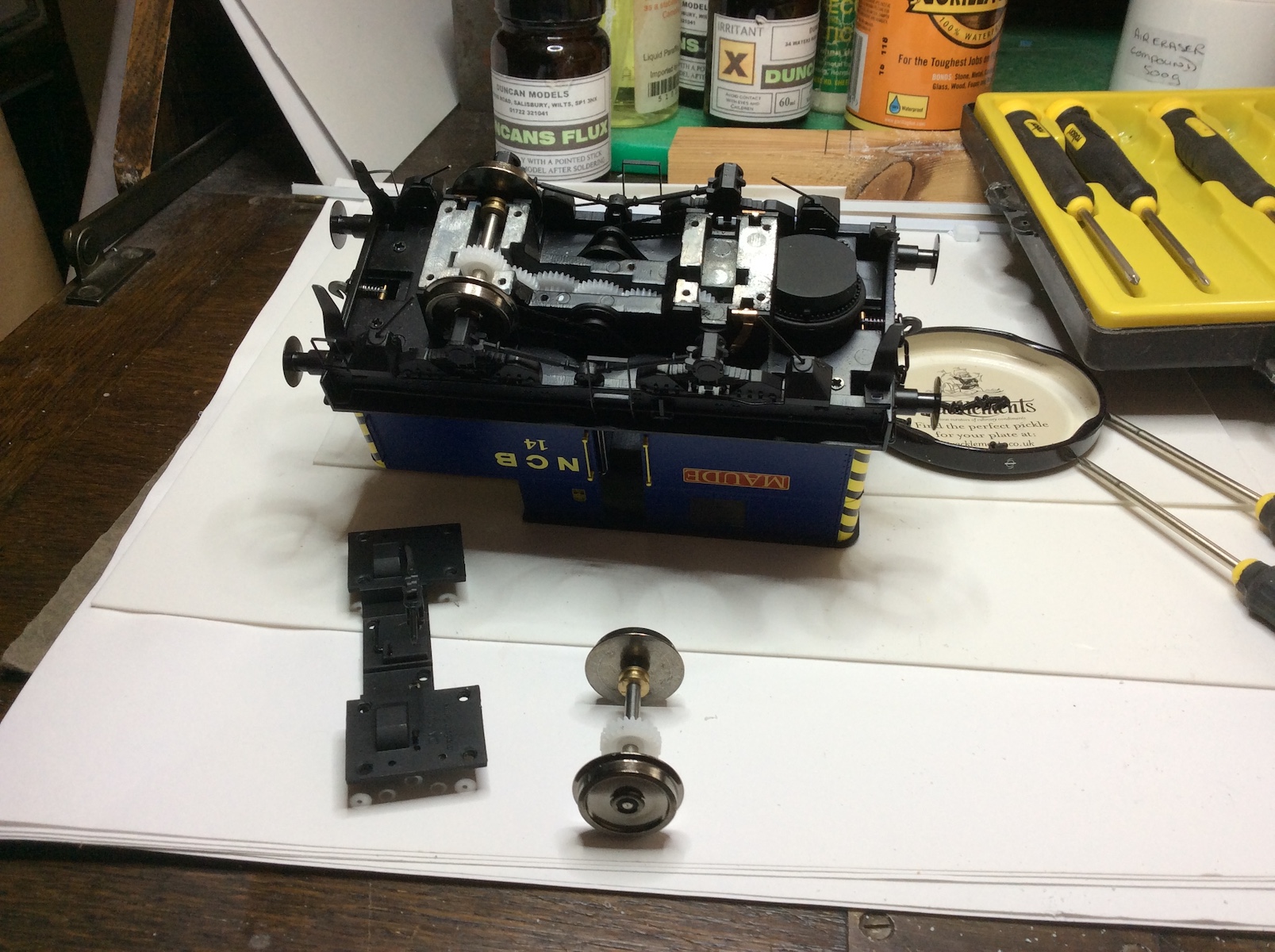
On the second loco I used the long-nose pliers to give a straight pull on the brake shoe. This broke the grip of the glue and the brake shoe came out. I repeated this with the other 3 brake shoes. I was then able to take out the screws retaining the cover plate. Then I could remove the wheel sets.
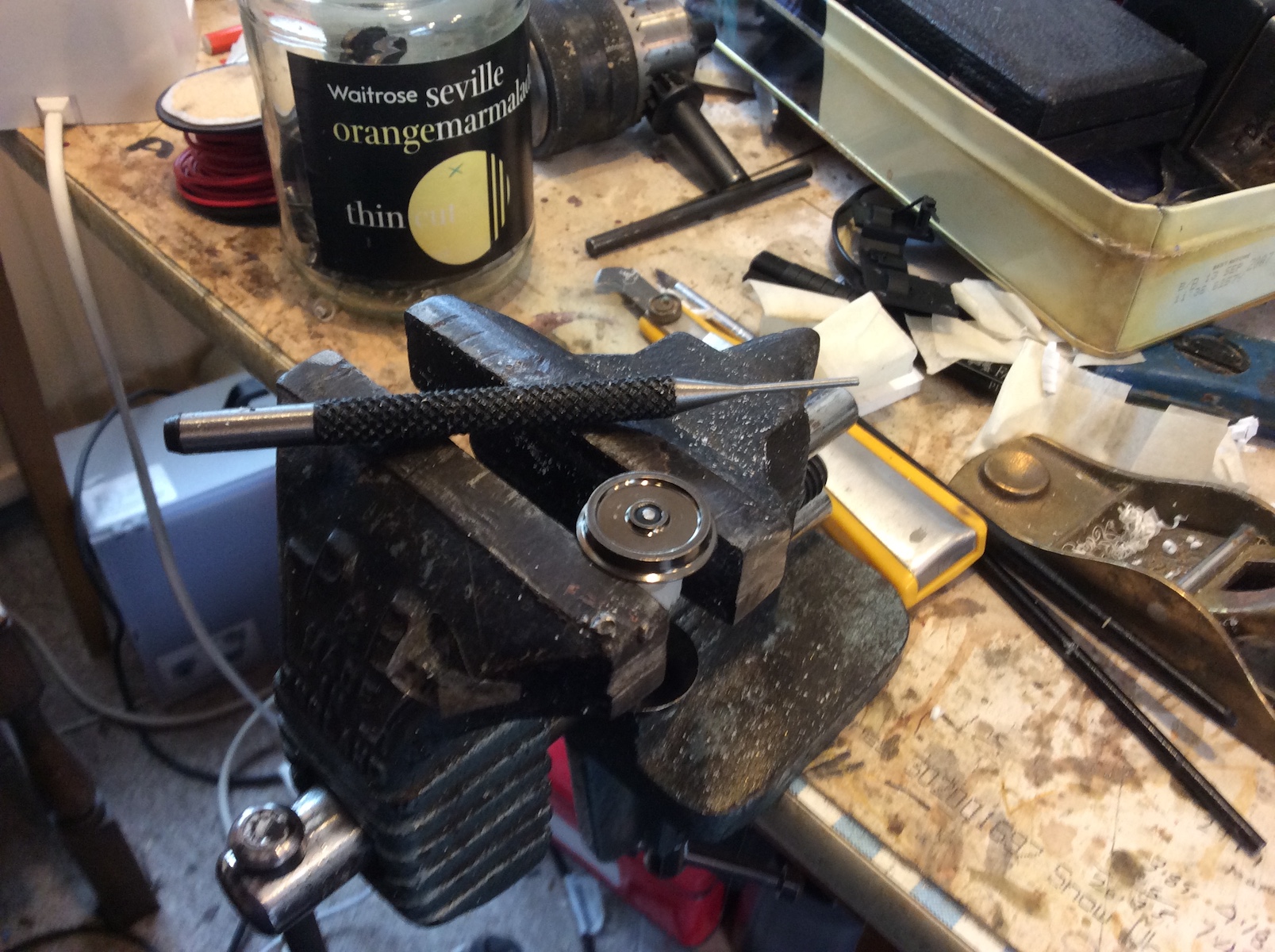
I placed one of the wheel sets across the partly open jaws of the vice. Then, using the punch, I gently tapped until the axle had moved just under 1mm. I then turned the wheel set round and tapped the axle down the same amount. It is important that each wheel is moved out by about the same amount in order that the gear wheel on the axle will still properly align with the rest of the gear train,
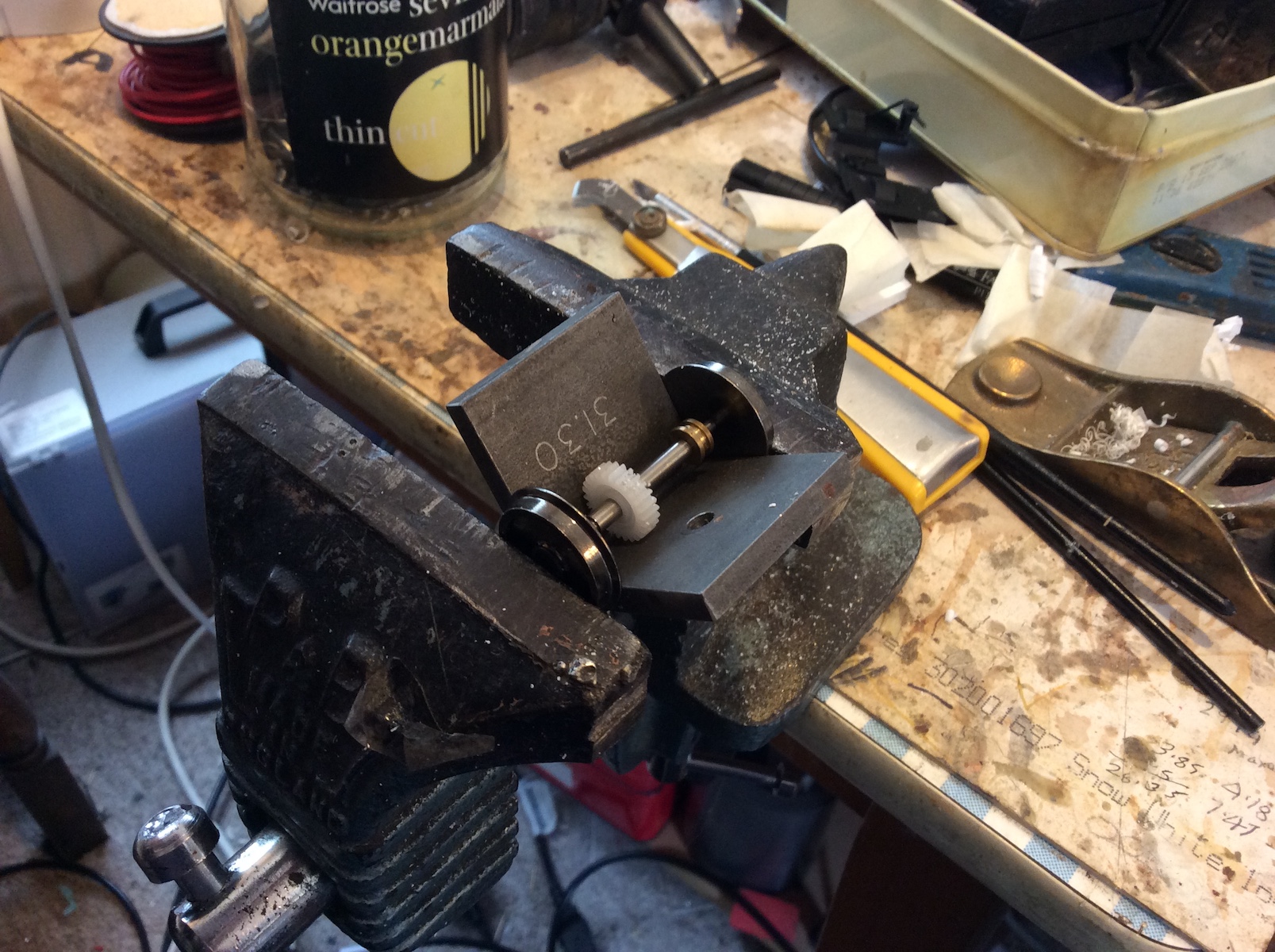
I repeated the operation with the second axle. Then using the back to back gauge in the vice I squeezed the wheels down onto the gauge.
The next task was to bend out the pick-up tabs on the chassis so that they would reach the back of the wheels in their new position. I used the two small slot screwdrivers to do this.
I then reassembled the loco and tested it. After cleaning the track, it worked well.
Top
Tanat Valley 3 by Peter Drost

John Borkowski converts Accurascale hopper wagons to S7

The Story of Reeth by Simon Caygill
For further information on the ScaleSeven Group, or if you have any questions: