

Tanat Valley 3 by Peter Drost
This article was originally published in the ScaleSeven Newsletter 132 in May 2023
An alternative conversion using Peartree S7 wheels can be found here
Back in 1966 as young boy I remember visiting a steel forging shop in West Hartlepool. Outside the window was a railway line with freight trains serving the town’s industrial zone consisting of heavy industries including a steel sections and pipe-mill serving the large oil and petrochemical industries on Teesside and the rest of the UK. On that particular day an Ivatt 4MT mogul was shunting a series of grey unfitted hopper wagons loaded with coke and coal for heating up the metal furnaces.
Then I had a OO gauge Hornby Dublo trainset and they had recently introduced a super detail hopper wagon. Following sighting the real thing in Hartlepool I now realised this wagon would be a desirable addition for my collection. Much to my regret, I never managed to acquire a hopper wagon until a few weeks ago I received an email from Accurascale offering me an attractive deal on up to 7 individual O Gauge super detail Hoppers.

I sent off an order for the 7 differently numbered wagons and within a week they duly arrived. Beautifully packaged they are impressive models with super detail fittings and sprung axles in working W irons. My only slight reservation was the side play in the axles which was several millimetres, a bit more that was perhaps desirable for best engineering practice. I suspect this excess side play was to allow for avoidance of buffer locking on tightly radiused curved O gauge track.
The instructions had a good diagram showing the layout of the individual parts making up the complete models. This enabled me quickly to work out an easy way to remove the wheelsets and to fit replacement S7 items. I will now attempt to explain how I accomplished this task.
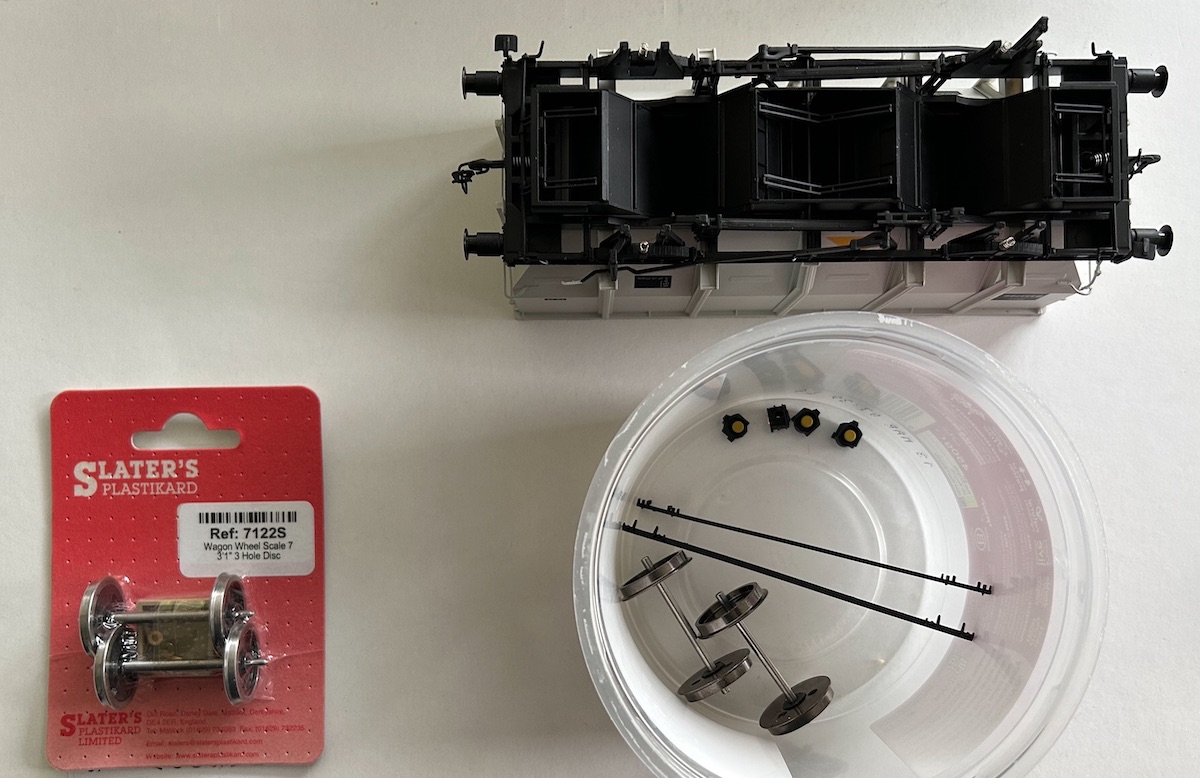
Following my usual practice, I decide to undertake two conversions. On the first wagon I decided to replace the O-gauge wheel sets with Slater's S7 items, and on the second wagon I fitted some machined-up Accurascale wheels made to S7 specifications. Both tasks proved relatively straightforward without too much difficulty. Both wagons run well and have joined my fleet.
To assist readers with the scope of work involved, I have taken a series of photographs some of which are reproduced here, but all of which hopefully will be put on our S7G website.
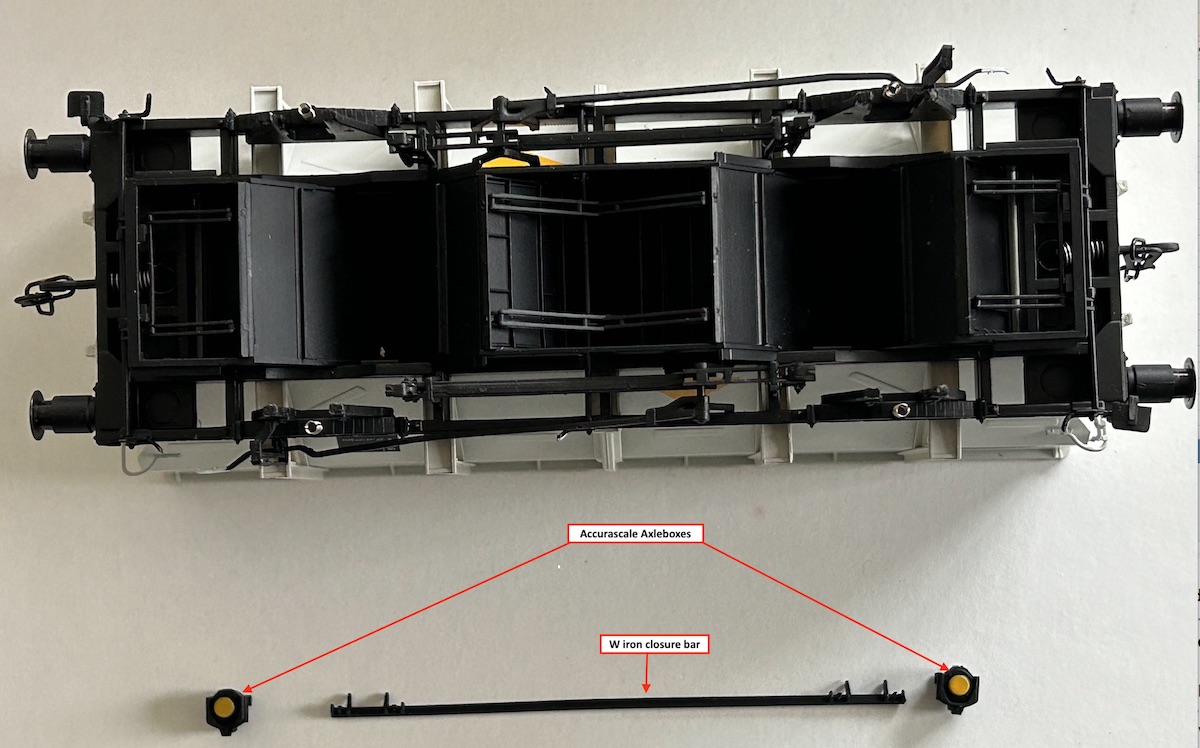
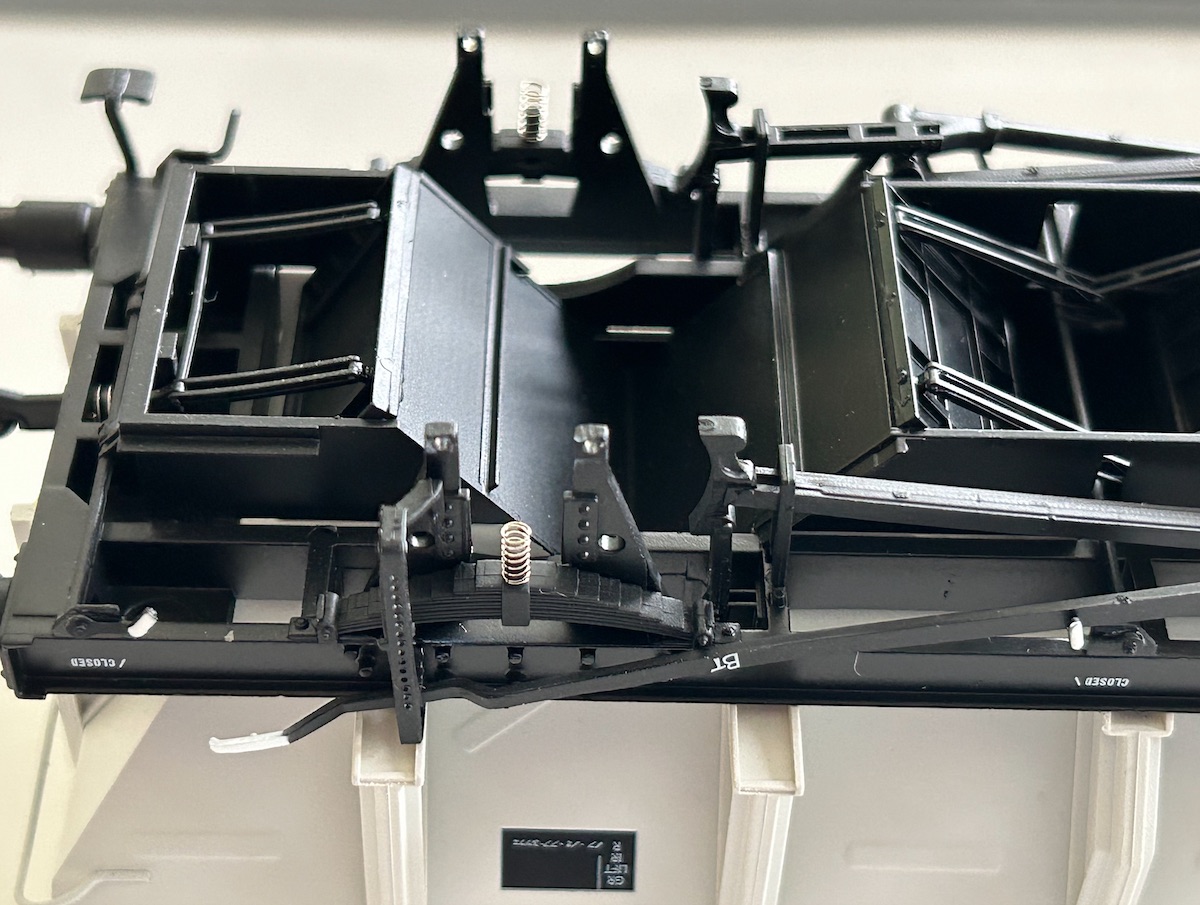
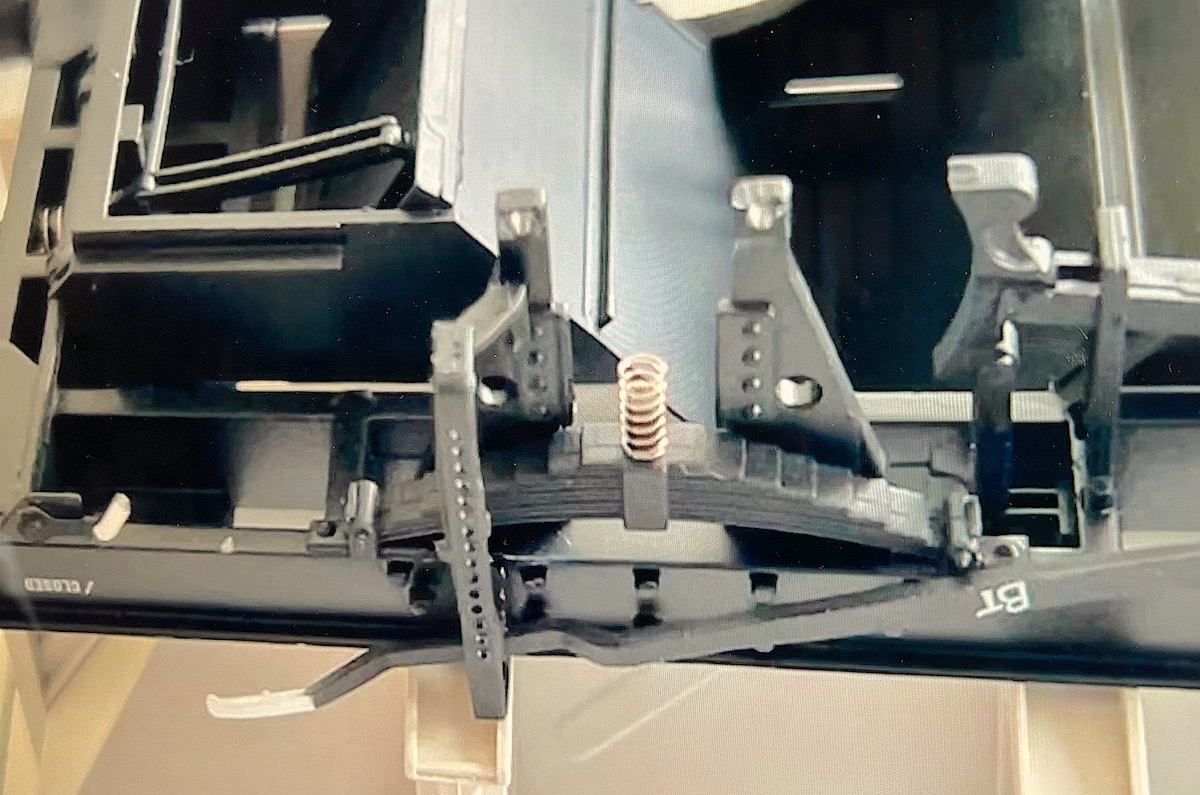
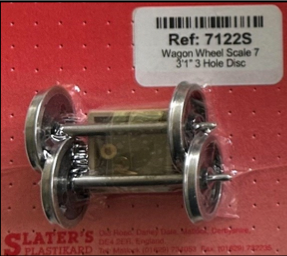
Two axles of Slater's Type 7122S 3’ 1” 3-hole Disc are required. These come in a single pack. These wheels are available direct from Slater's with a 10% discount for S7G Members.
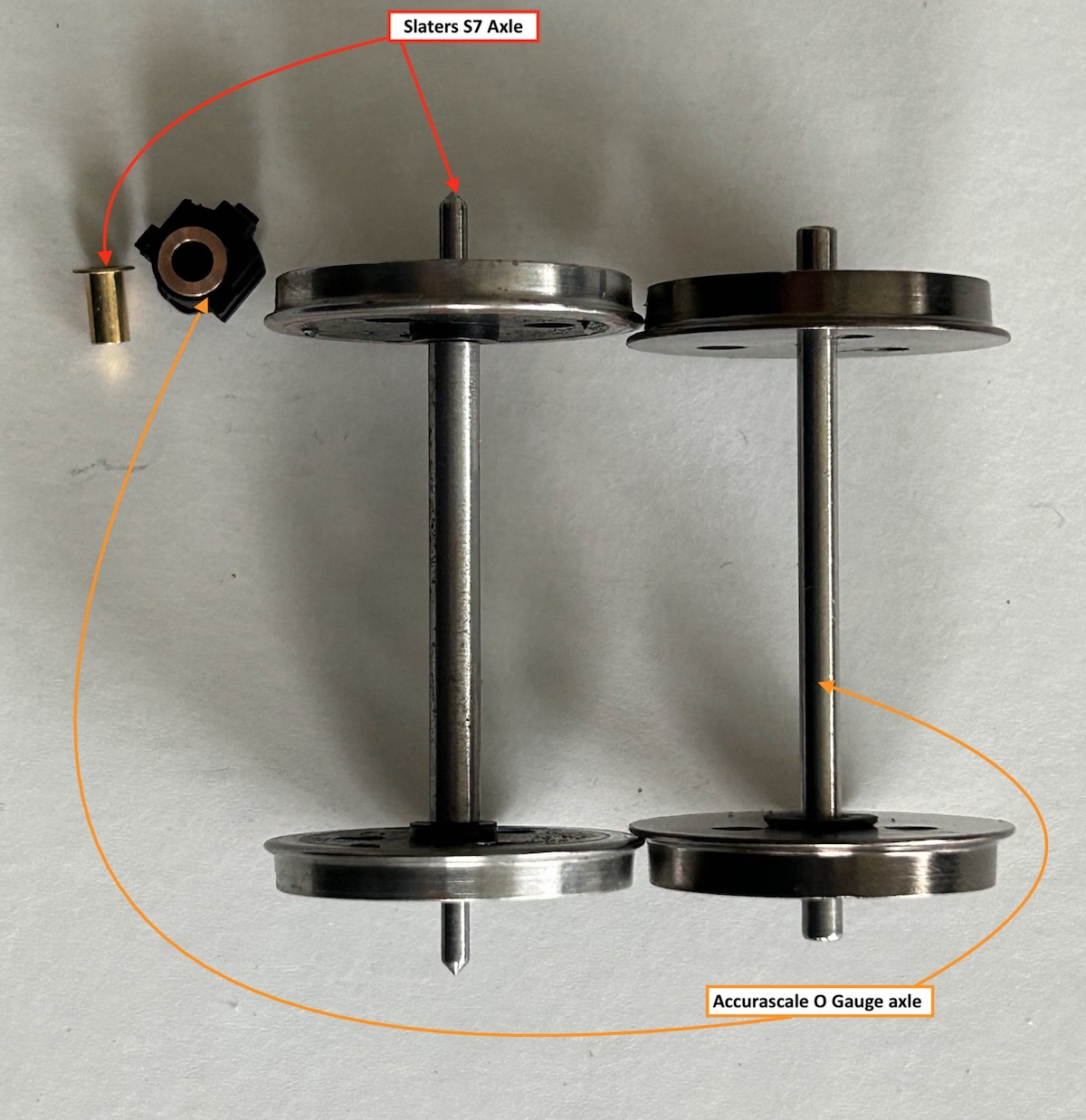
Axle bearings are provided with these wheelsets. Unfortunately, the diameter of the Slater's wheels axle ends is much smaller than the Accurascale axle ends so it is not possible to use the Slater's wheels directly into the Accurascale bearings.
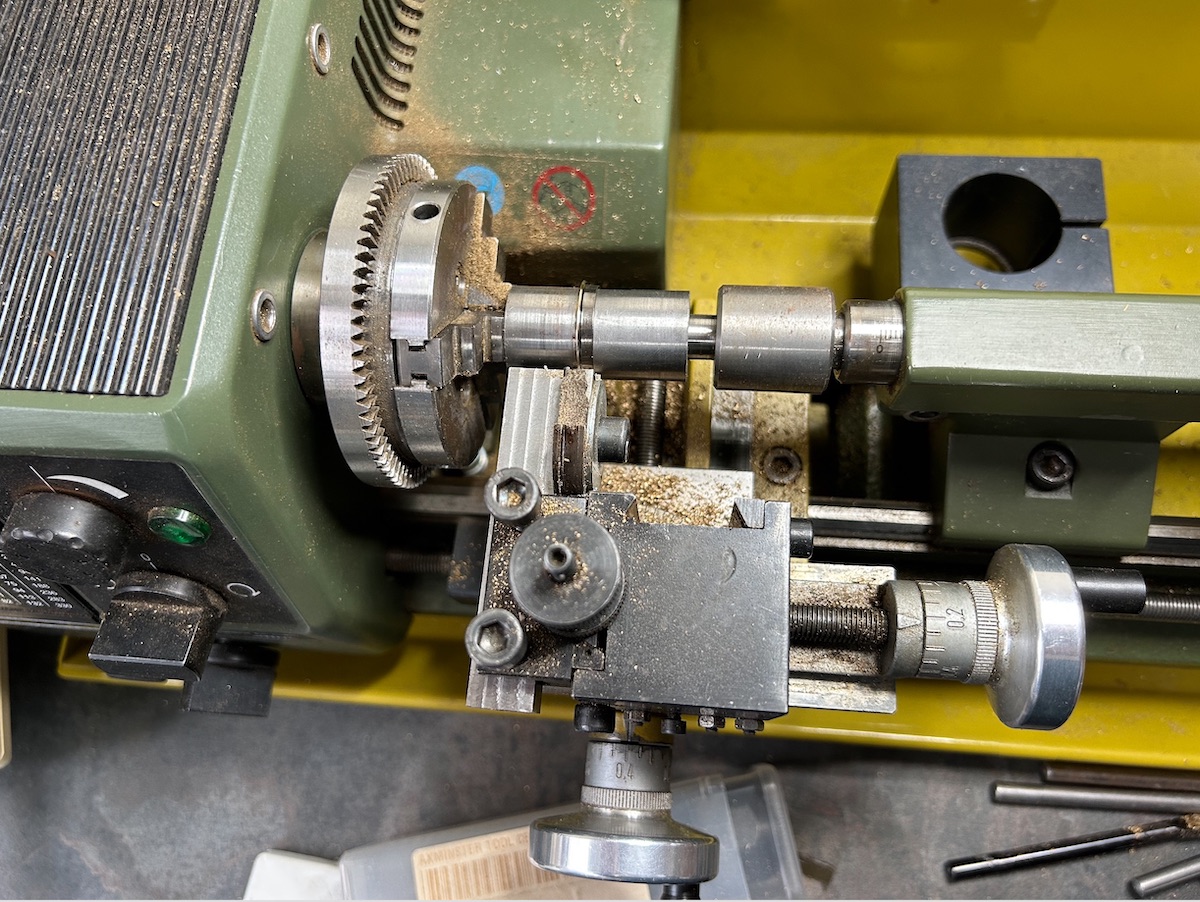
This requires either a suitable lathe and an S7 profiling tool or asking someone with these facilities to carry out this work. I am very lucky to have a small Proxxon lathe and the S7 stores wheel profiling tool. This equipment enabled me to carry out this work comparatively easily, once I had made a specialist wheel-holding tool.
If you do not have these facilities, you can make contact with our S7 member Colin Dowling who carries out this work on a professional basis for a very reasonable cost. Colin’s work is much better than mine, so he is well worth using for all wheel turning jobs.
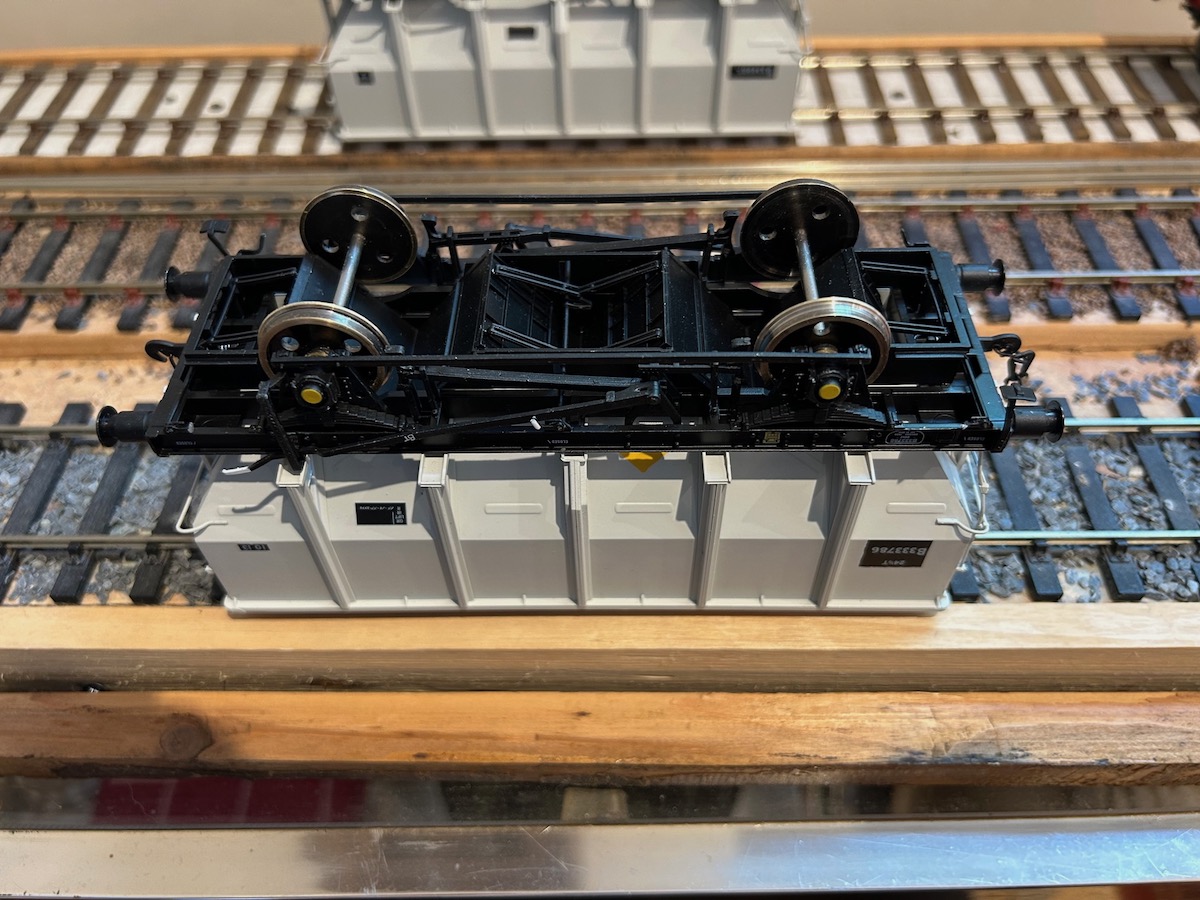
Once the wheelsets are converted to S7 they are refitted in unmodified Accurascale axleboxes with 3 or 4 brass 2.5 mm washers to limit the sideplay. I bought my brass washers online for the Western Diesel programme modifications with some extras for other uses. There are numerous suppliers on the Internet with very competitive pricing.
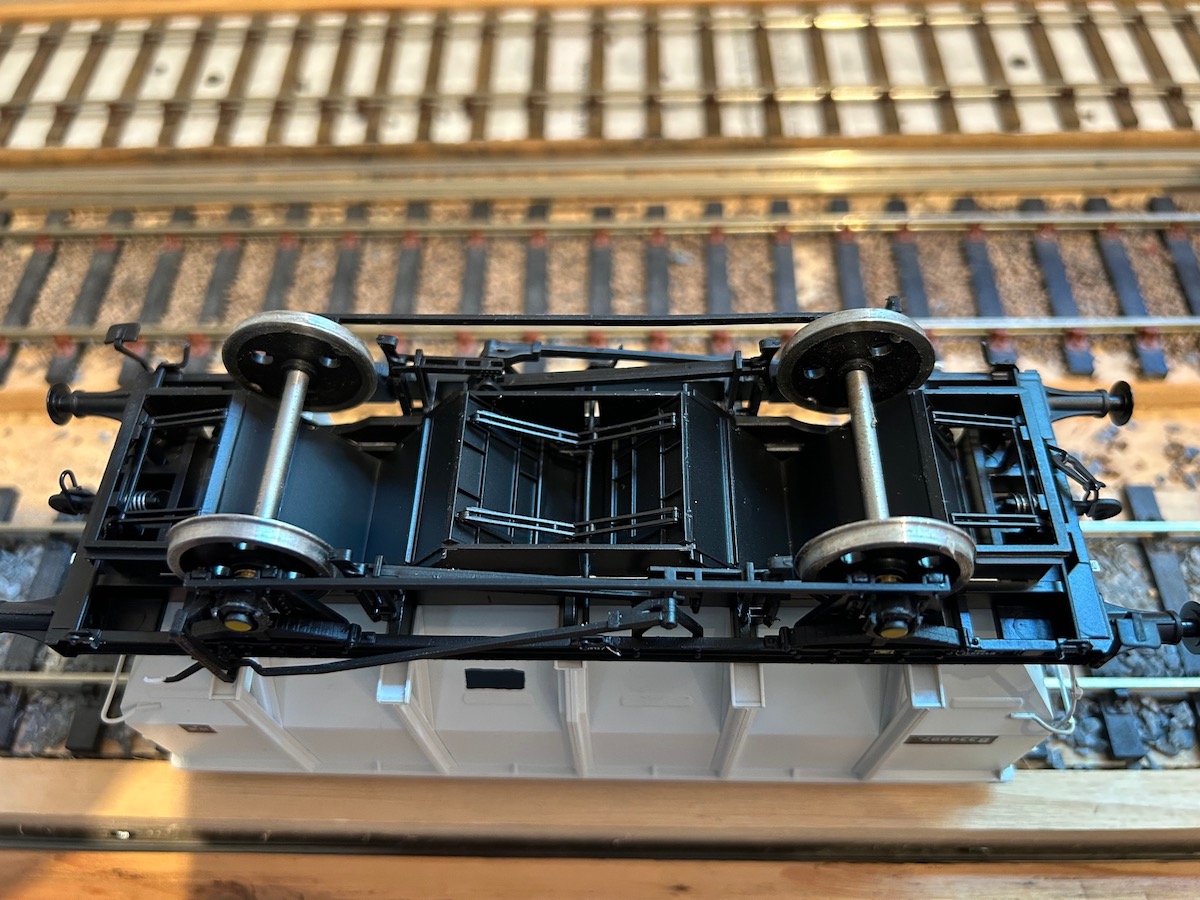
When the wheelsets are back in place in the W-irons, refit the plastic bars as is described in the earlier section on fitting Slater's wheels.
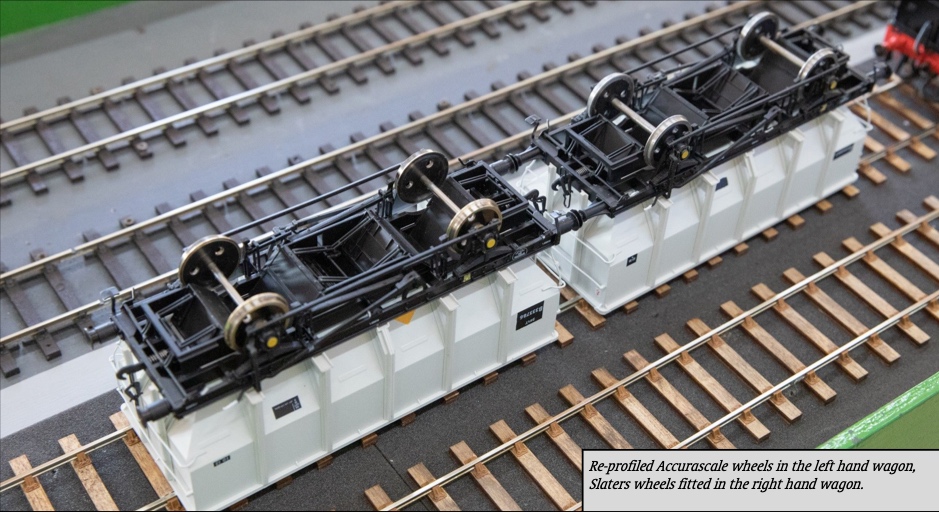
Selecting which wheelset to use is a personal preference matter. In my view the Slater’s wheel is little better looking than the modified Accurascale wheel, but the Slater's wheel tyre, being made mild steel, does rust easily especially when parked for long periods on track, whereas the Accurascale wheels are made of brass and can be chemically blackened if required.

I now have to convert the other 5 wagons to make up a short train for a Scale 7 Masterpiece Models Pannier, 28XX or even a Western!
Tanat Valley 3 by Peter Drost
John Borkowski converts Accurascale hopper wagons to S7

The Story of Reeth by Simon Caygill
For further information on the ScaleSeven Group, or if you have any questions: